

Indonesia reopened Jakarta’s main airport and four others on Tuesday after volcanic ash from Mount Anak Krakatau disrupted nearly 3,000 flights and affected around 341,000 passengers.
Soekarno-Hatta International Airport resumed operations after winds shifted volcanic ash away from the surrounding airspace, Transport Minister Dudy Purwagandhi said.
Halim Perdanakusuma Airport in Jakarta and Husein Sastranegara Airport in Bandung also resumed operations at 12:01 am on Tuesday, while Budiarto and Pondok Cabe airports reopened at 2:25 am, according to Indonesia’s Transport Ministry.
Two airports in Lampung — Radin Inten II and Muhammad Taufiq Kiemas — remained closed pending further assessment of volcanic ash conditions.
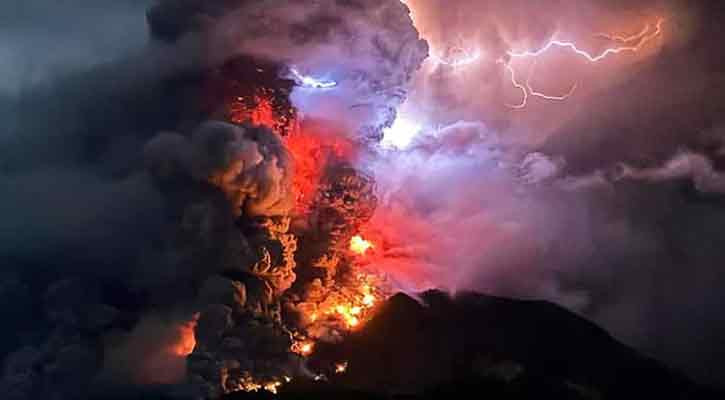
Anak Krakatau, located in the Sunda Strait between the islands of Java and Sumatra, began erupting late on Friday, sending lava fountains into the air and spreading volcanic ash across Jakarta and surrounding regions.
The eruptions prompted authorities to close eight airports at the height of the disruption for aviation safety.
As of Monday afternoon, 2,961 domestic and international flights had been delayed, diverted or cancelled, affecting around 341,000 passengers, Indonesian officials said.
The affected flights included 2,339 domestic services and 622 international flights.
Hundreds of thousands of travellers faced delays and cancellations over the weekend and on Monday, with long queues forming at airports as passengers sought refunds, rebooked flights or looked for alternative transport.
Authorities extended the closure of Soekarno-Hatta and several other airports until 11:59 pm on Monday after monitoring showed volcanic ash remained a threat to aircraft operations.
Purwagandhi said officials had been regularly testing conditions around the affected airports before deciding whether they were safe to reopen.
The Transport Ministry said 178 aircraft that had remained at Soekarno-Hatta during the closure would need checks to ensure they were airworthy before returning to service.
Indonesia’s meteorological agency BMKG said volcanic ash had spread at different atmospheric levels, reaching up to 50,000 feet in some areas.
On Monday, BMKG detected ash at up to 15,000 feet spreading across parts of Banten, West Java, Lampung and Bengkulu, while higher-level ash between 15,000 and 50,000 feet extended west and southwest over parts of the Indian Ocean.
Indonesia’s volcano monitoring agency has warned that the possibility of further eruptions remains high.
Authorities have advised people to stay away from an exclusion zone around Anak Krakatau and take precautions against volcanic ash. Monitoring has so far found no indication of a tsunami associated with the latest series of eruptions.
Anak Krakatau, which means “Child of Krakatau”, emerged from the caldera left by the catastrophic 1883 eruption of Krakatau.
A partial collapse of Anak Krakatau in December 2018 triggered a tsunami that killed more than 400 people along the coasts of Java and Sumatra.
Indonesia has around 130 active volcanoes and lies along the Pacific “Ring of Fire”, a highly seismic zone where several tectonic plates meet.
Source: BBC
















Comment :