

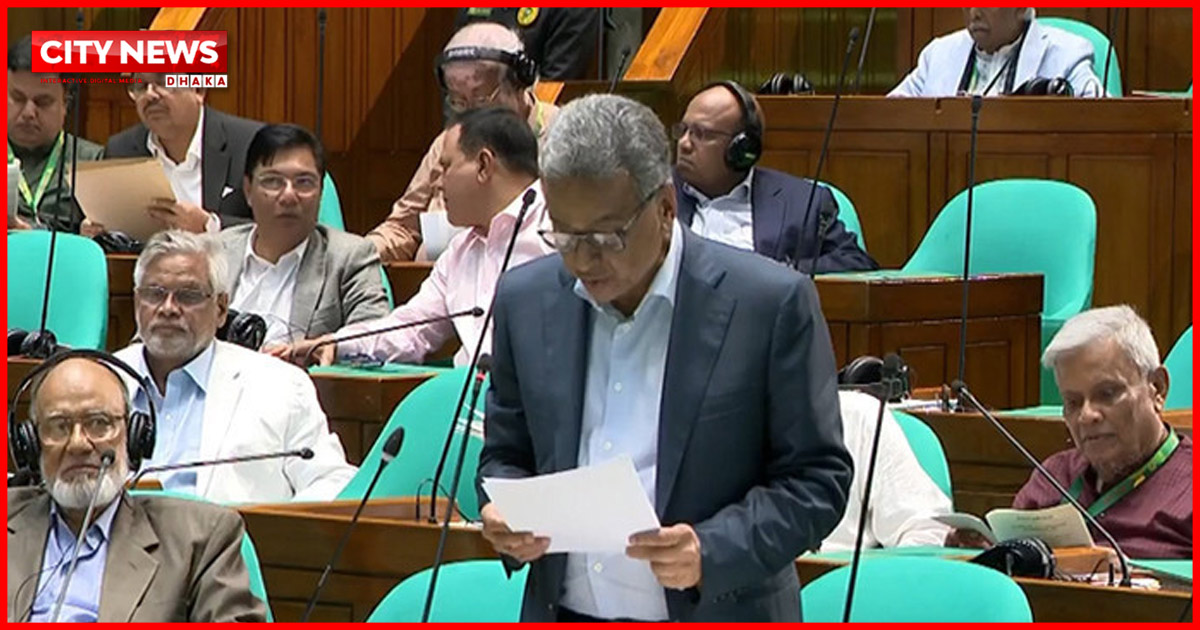
The Jatiya Sangsad (JS) on Monday (June 29) passed the Finance Bill 2026 with a series of significant amendments, including an increase in the income tax-free threshold for individual taxpayers and the withdrawal of a proposed provision on the disclosure of investments.
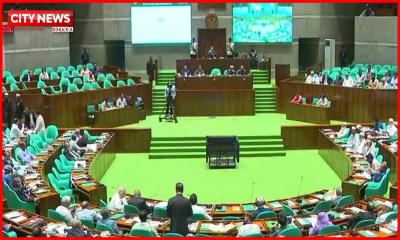
Finance Minister Amir Khasru Mahmud Chowdhury moved the bill, which was passed by voice vote with Speaker Hafiz Uddin Ahmad, Bir Bikram, in the chair.
Following recommendations made during the budget discussion, the Finance Minister revised several proposals in the national budget, including a phased increase in the income tax-free threshold for individual taxpayers over the next five fiscal years.
Under the revised structure, the tax-free ceiling will be Tk 400,000 for FY2026–27 and FY2027–28, Tk 450,000 for FY2028–29 and FY2029–30, and Tk 500,000 for FY2030–31. The earlier proposal had set lower thresholds for the same periods.
The government also withdrew a proposed provision on the disclosure of investments, which had triggered public concern and confusion.
The minister said the proposal was originally intended to address complications arising from land transactions being registered at mouza values rather than actual market prices. However, the provision was dropped following public feedback.
Khasru also withdrew two other proposals that had generated confusion: making Taxpayer Identification Number (TIN) certificates mandatory for opening most bank accounts, and requiring TIN certificates for registration of partition deeds and property mutations.
The Finance Minister proposed reducing the corporate tax rate for private universities from 10 percent to 5 percent.
He also expanded tax exemptions for indigenous communities in both the Chittagong Hill Tracts and the plains, proposing that salary income, in addition to business, agricultural and other income, be exempted from tax.
To support the shrimp sector, the bill proposes withdrawing customs duty, regulatory duty, supplementary duty and VAT on imported shrimp feed, probiotics, vitamins, minerals and related machinery.
It also proposes duty concessions on imported raw materials for local industries and the removal of a 10 percent supplementary duty on imported honey used by pharmaceutical and other manufacturing sectors.
The minister proposed reducing import duty on PVC and PET resin, widely used in industry, from a proposed 10 percent to 5 percent.
He also proposed withdrawing regulatory duties on imported cold-rolled sheets used in fire door manufacturing, coated chromium oxide used in flat steel products and refined copper wire used in cable production.
In addition, he proposed abolishing a proposed 15 percent VAT and advance tax on imported fire bricks.
The duty on unprocessed cashew nuts used by domestic processors will be reduced from 15 percent to 5 percent.
The Finance Minister also proposed extending duty concessions on raw materials for locally manufactured LED lamps and prefabricated buildings until June 30, 2030.
To encourage formal payment channels for digital advertising, he proposed cutting VAT on ads on social media platforms, OTT services, search engines, online marketplaces and other digital media from 15 percent to 5 percent, saying the move would help reduce informal overseas payments and improve compliance.
He also proposed fixing VAT on jewellery at Tk 2,500 for gold, platinum and diamond items, and Tk 100 for silver jewellery. The bill exempts a 15 percent VAT on revenue-sharing arrangements with the Bangladesh Telecommunication Regulatory Commission (BTRC) and grants VAT exemption at supplier level for fish supplies.
To support domestic automobile manufacturing, VAT on locally produced double-cabin pickup trucks and microbuses has been reduced from 15 percent to 5 percent.
The Finance Minister also eased VAT compliance requirements for selected sectors by relaxing coefficient filing rules.








Comment :