

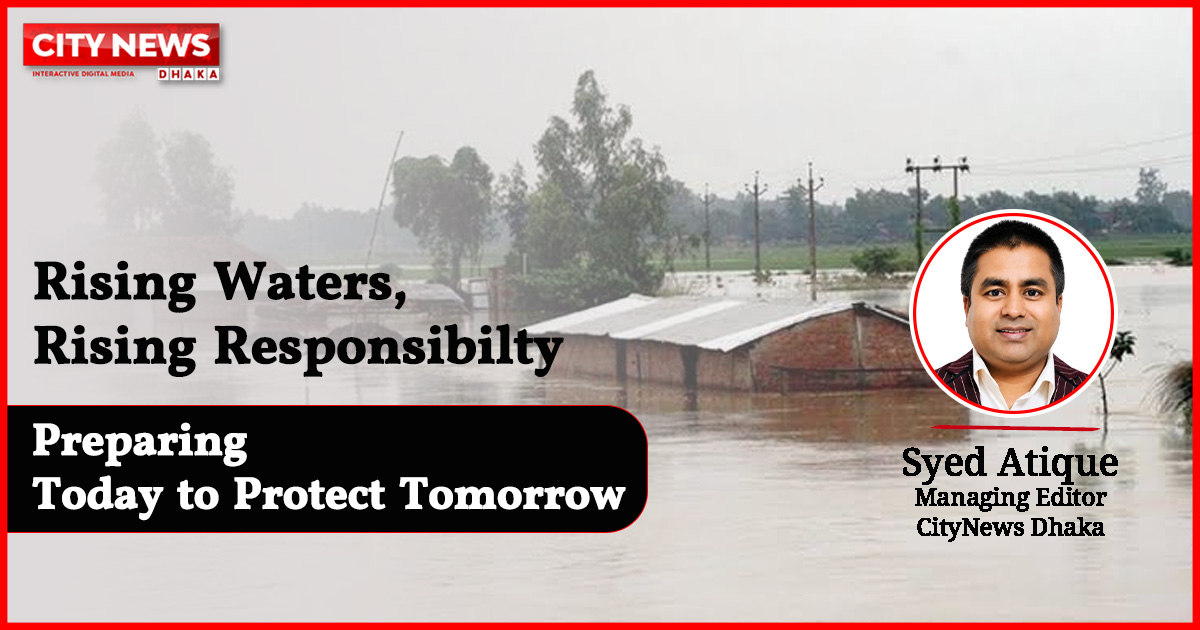
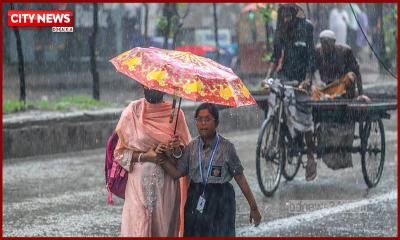
The monsoon is both a blessing and a recurring challenge for Bangladesh. As in previous years, heavy to very heavy rainfall across the country and in India’s northeastern states has caused the water levels of major rivers to rise rapidly. The Dudhkumar River in Kurigram has already crossed the danger level, while the Teesta, Surma, Kushiyara, and Jadukata rivers are flowing close to their warning thresholds. If the rainfall continues over the coming days, several low-lying areas across the country may experience flash floods or a worsening flood situation.
These forecasts must not be taken lightly. Past experience has shown that even short-term flooding can inflict severe damage on lives, agriculture, education, and the economy if timely preparations are not made. Riverbank erosion and char (river island) communities remain the most vulnerable, with homes, crops, livestock, and livelihoods all at significant risk.
A major contributor to flooding in Bangladesh is the influx of upstream water. Heavy rainfall in the Indian states of Assam, Arunachal Pradesh, Meghalaya, and West Bengal quickly impacts the rivers flowing into northern and northeastern Bangladesh. When upstream runoff combines with local rainfall, the situation becomes far more critical. This reality highlights the urgent need for stronger cross-border cooperation in river data sharing and integrated water resource management.
According to the latest forecasts, the Brahmaputra-Jamuna basin, along with the Teesta and Dharla rivers, may exceed danger levels in the coming days. Residents of Kurigram, Gaibandha, Lalmonirhat, Nilphamari, Rangpur, Jamalpur, Bogura, Sylhet, Sunamganj, Netrokona, Mymensingh, and Sherpur should remain especially vigilant. At this crucial time, stronger coordination among local administrations, the Bangladesh Water Development Board, the Department of Disaster Management, and local representatives is essential.
Preparation means far more than simply stockpiling relief supplies. Authorities must ensure that early warning messages reach vulnerable communities, emergency shelters are ready, and adequate supplies of dry food, safe drinking water, medicines, and livestock protection are available. Farmers also require special support, while comprehensive rehabilitation plans for affected families should be prepared in advance.
Climate change is making extreme weather events increasingly frequent in Bangladesh. The country is now facing a cycle of prolonged droughts and sudden floods. Therefore, beyond emergency response, greater emphasis must be placed on long-term river management, sustainable embankment construction, river dredging, and climate-resilient infrastructure.
Citizens also have an important role to play. Avoiding rumors, following official warnings, minimizing unnecessary risks, and complying with the guidance of local authorities can significantly reduce the human and economic costs of flooding.
Nature cannot be defeated, but its impact can be minimized through preparedness, careful planning, and coordinated action. While flooding remains a forecast rather than a full-scale disaster, now is the time to act. For Bangladesh, this is not merely a precaution—it is an urgent national responsibility.













Comment :