

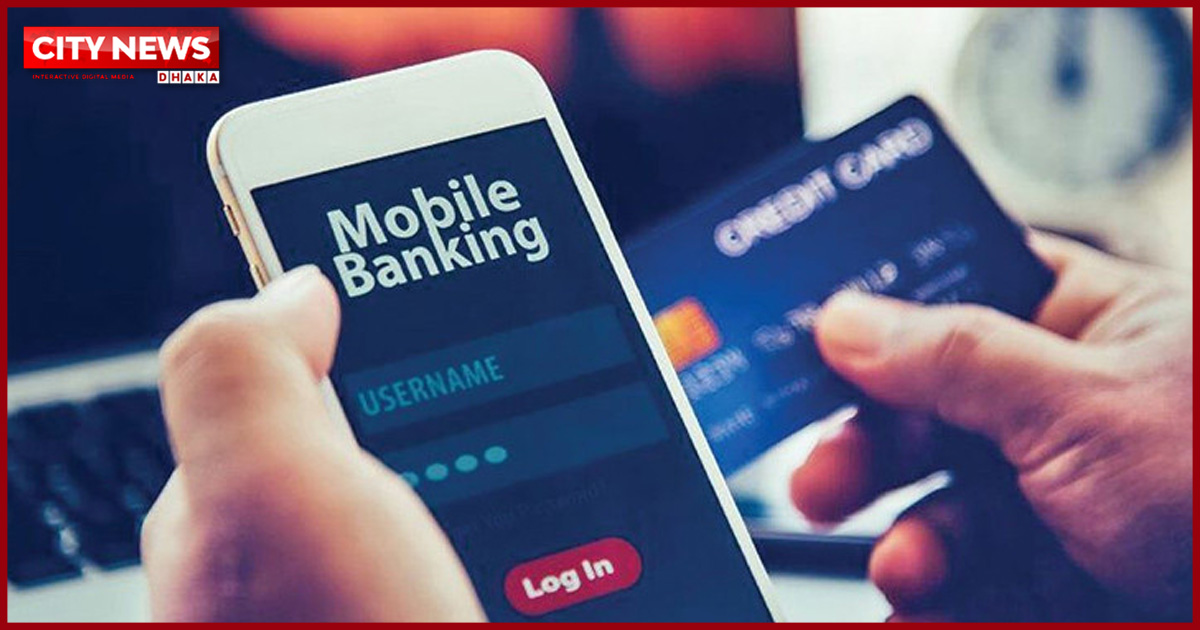
Mobile banking has been restricted to prevent illegal cash transactions during the election, leaving the public facing difficulties as person-to-person electronic transfers have been halted and daily activities disrupted.
Cash transactions, however, are still continuing.
Reports are also emerging daily on social media suggesting illegal transactions are not being stopped, amid allegations that the Election Commission has been unable to take action.
Services such as bKash, Nagad and Rocket have become essential for transactions, as routine activities now rely on transferring funds online from one bank to another, or from one account to another.
Since Monday night, February 9, the restrictions on mobile banking and online transfers have created transaction problems, with those accustomed to such services saying their lives have come to a standstill.
Private-sector employee Tanvir Ahmed said he keeps money for daily expenses in mobile banking and withdraws and spends it as needed. Since Monday night, he has been unable to withdraw more than Tk1,000, and cannot send money from elsewhere, leaving him unable to complete transactions even for urgent needs.
He said the inability to transfer funds through mobile banking has caused serious difficulties. He added that before mobile banking, he would withdraw money from a bank and keep it at home or carry it, but now he no longer keeps cash at home, and being unable to withdraw more than Tk1,000 has left him effectively stuck.
He said pocket expenses, travel and giving or receiving money are no longer possible, forcing him to think repeatedly before going out and bringing daily work to a halt.
Mirpur resident Amirul Islam has also faced difficulties after mobile banking transactions were restricted. He said he needed to send Tk5,000 to his village home, but after sending Tk4,000 four times he has been unable to send more money, including Tk1,000 to his village home and money for his mother’s medicine.
He said he has been running from place to place trying to send at least Tk1,000, but has been unable to do so, and agents have turned him away.
The same problem has affected recipients, he said, adding that he has received messages that they have been unable to withdraw the money.
Bangladesh Bank has capped mobile banking person-to-person transactions to a maximum of Tk1,000 per personal account for 96 hours to prevent illegal cash dealings ahead of the 13th national parliamentary election on Thursday, February 12. The instruction will remain in force from 12:00am on Monday, February 9, to 11:59pm on Thursday, February 12.
Bangladesh Bank issued a directive on Sunday, February 8, informing all mobile financial service providers operating in the country.
The directive said the maximum limit for each mobile financial service person-to-person transaction will be Tk1,000, with a maximum of four transactions per day. It said existing rules for merchant payments and utility bills will remain unchanged, while all other MFS transactions will be temporarily suspended during the period.
The directive said each MFS provider must form its own quick response cell to receive and resolve MFS-related complaints during the election period. It also said all transactions during the period must be brought under round-the-clock close monitoring by providers, and suspicious or abnormal transactions must be reported to the relevant police station as quickly as possible.
It said person-to-person internet banking via IBFT will be completely shut during the period, and that MFS providers and banks will provide necessary support to the Election Commission and law enforcement agencies as required. Normal transactions will be restored as usual after 12:00am on Thursday, February 12.
Mobile banking has around 24 crore registered customers and more than 15 lakh agents, with an average of two accounts per adult in the country, one of which is used regularly. The services have gained popularity quickly because of the ability to send and receive money rapidly and the convenience of withdrawing or sending funds nearby, while mobile banking has also become a source of small loans.
With restrictions in place, customers have faced difficulties in withdrawing more than Tk1,000. The curbs have also created an impression that larger cash-outs would make it unclear who is withdrawing money and for what purpose, while agents of bKash, Nagad and Rocket have been keeping lower balances amid fears that authorities may monitor larger withdrawals or transfers.
Those who transfer money online from one account to another have also faced problems, including difficulties sending money between bank accounts. Some mobile banking providers have disabled options for sending money from mobile banking to banks, while in some cases online transfers have been debited from customers’ accounts without being credited.
Cash dealings continue
Despite limits on mobile banking transactions to curb the use of money in elections, hand-to-hand cash transactions have not stopped. Videos showing money being given either directly by candidates or on their behalf have been appearing on social media daily.
Over the past two days, one set of images circulating online shows voting being requested for a candidate of a political party, followed by a scene in which money is given. Another set of images includes allegations that several people pointed to an injured person and said he was beaten when he protested as members of another party were giving money to buy votes, and that one of his eyes was damaged. Money in envelopes and leaflets are also seen being distributed.
Rumour of ATM cash withdrawal shutdown
After person-to-person mobile banking transactions were limited and personal-level online transactions were shut, a rumour spread that cash could not be withdrawn from automated teller machines. Bangladesh Bank has issued no directive on the matter, and checks at booths in different parts of the capital on Wednesday morning found no evidence of such a shutdown, with customers able to withdraw cash from almost all ATMs.


Comment :